17 July 2026 · Rainbow Voice Afghanistan · 6 minute read
Introduction
Anosh is an Afghan trans woman whose life has been shaped by the danger attached to being visibly different in a society where gender identity is heavily controlled by family expectations, social norms and armed authorities. Her experience is not a single incident of discrimination. It is a long sequence of fear, concealment, abuse, displacement and uncertainty.
Her story shows how persecution can continue even after a person crosses a border. Leaving Afghanistan removed her from the immediate reach of the Taliban, but it did not automatically provide safety, legal stability or a future. In Pakistan, she entered another difficult period defined by temporary status, financial pressure and fear of forced return.
Life Before Leaving Afghanistan
Before displacement, Anosh lived in an environment where expressing her gender identity could attract attention from relatives, neighbors, local authorities and armed groups. Everyday activities such as leaving home, choosing clothing, speaking openly or seeking work could carry serious risk.
She learned to evaluate people constantly: who could be trusted, which places were safe, whether a conversation might expose her and whether a photograph or message could be used against her. This permanent state of alert affected her emotional wellbeing and made ordinary life extremely difficult.
The danger was not limited to public spaces. For many LGBTQI+ Afghans, the family home can also become unsafe when relatives believe that gender identity or sexual orientation brings shame. The possibility of rejection, confinement, forced marriage, physical violence or being reported to authorities can leave a person with nowhere secure to turn.
Abuse and Fear Under Taliban Rule
Anosh reports that Taliban authorities subjected her to abuse and torture because of her identity. The experience convinced her that remaining in Afghanistan was no longer possible. She believed that future contact with the authorities could lead to renewed violence, detention or death.
The fear created by such abuse does not end when the incident is over. Survivors may continue to experience nightmares, panic, difficulty sleeping, distrust and fear of public places. They may also avoid healthcare or legal assistance because describing what happened could reveal their identity.
For a transgender person, hiding can be especially difficult when appearance, voice, official documents and gender expression do not match the expectations of officials or strangers. This can make checkpoints, document inspections and public movement particularly dangerous.
Displacement to Pakistan
In 2024, Anosh moved to Pakistan while connected to a German resettlement process. The journey represented hope, but it also required leaving behind familiar places, relationships and whatever support remained in Afghanistan.
Arrival in Pakistan did not bring permanent protection. She had to navigate unfamiliar systems, temporary accommodation and uncertainty about how long the resettlement process would take. Delays created a painful situation: she could not safely return to Afghanistan, but she also could not build a stable life while waiting.
Displaced LGBTQI+ people may face difficulty renting housing, finding lawful employment and accessing healthcare. Those who are visibly transgender can encounter harassment in streets, shops and transport. Fear of arrest or document checks may also limit movement.
Waiting for Resettlement
Resettlement procedures can take months or years. During that time, applicants may receive little information and may not know whether their case is progressing. Each delay can increase anxiety, especially when visas or temporary permissions are approaching expiration.
For Anosh, waiting means living with two competing fears: that the resettlement process may fail, and that Pakistani authorities may require her to leave. The uncertainty affects decisions about housing, work, medical care and relationships.
It also creates emotional exhaustion. A person may feel unable to plan for education, employment or a permanent home because every part of life depends on a decision made elsewhere.
Fear of Forced Return
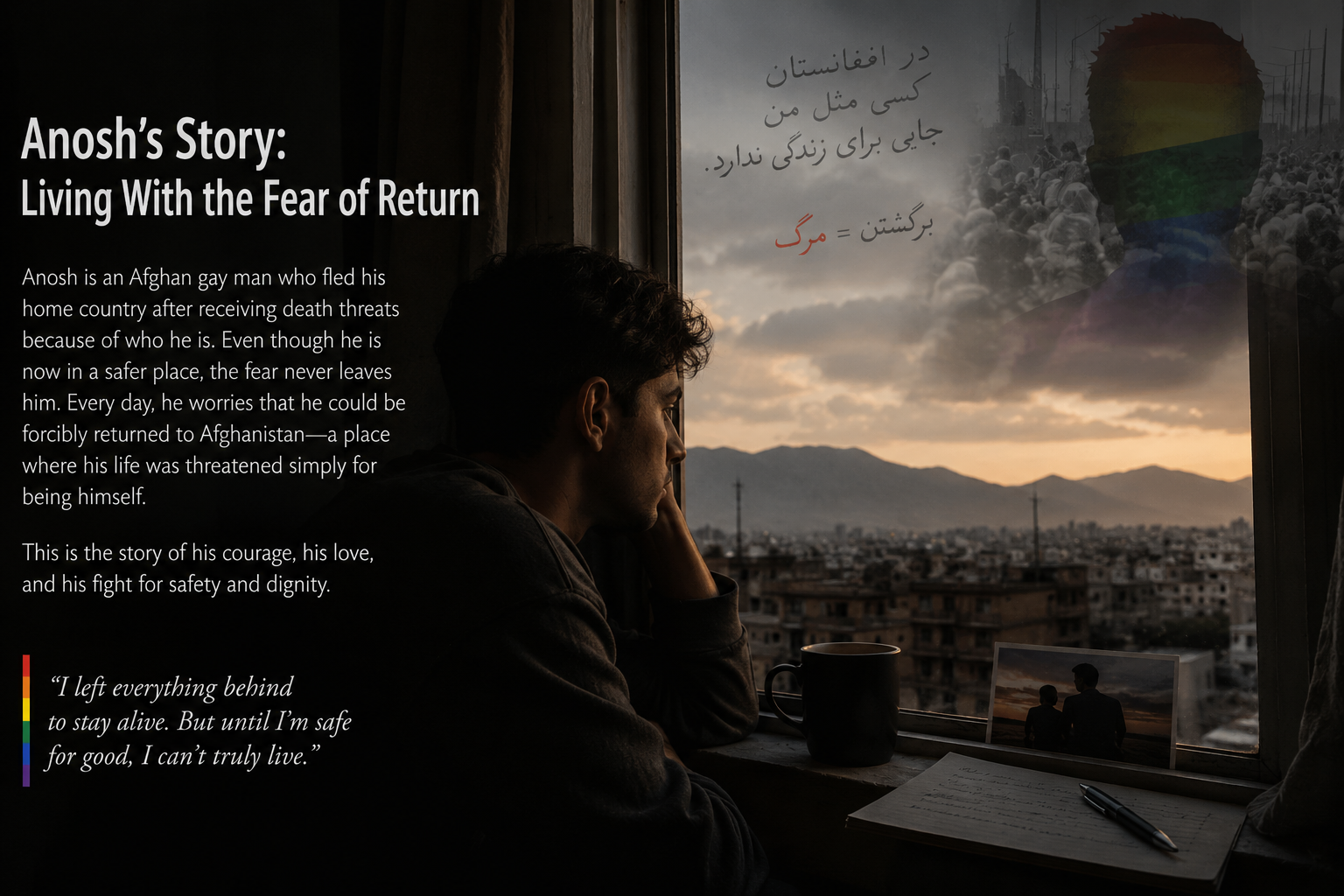
Anosh believes that forced return to Afghanistan would place her life in immediate danger. Her fear is based on her past treatment, her visible identity and the lack of effective protection for transgender people under Taliban rule.
Return would not simply mean going back to a previous residence. It could mean re-entering the same networks of family pressure, community surveillance and official persecution from which she escaped. It could also expose people who helped her.
Her case demonstrates why protection assessments must be individual. Authorities should consider past abuse, gender identity, family threats, visibility, mental-health consequences and the practical reality of living under Taliban control.
What Anosh Needs
Anosh needs a secure legal pathway, confidential case support, safe accommodation and access to healthcare that respects her identity. She also needs clear communication about her case so that uncertainty does not become another form of prolonged harm.
Her story is a reminder that protection must continue throughout displacement. Safety cannot be measured only by whether a person has crossed a border. It must include freedom from detention, violence, forced return and constant fear.